A 5-minute reset for a busy, noisy day
Not medical advice.
6 min read
Some days do not give you a long break. The messages keep arriving, the list grows, and by the afternoon your head feels full. A reset is a short pause that asks very little of you. Five minutes, no equipment, no special place.
Why a short pause works
When you are busy, your body quietly tightens: shoulders rise, jaw clenches, breath goes shallow. You often do not notice until the day is over. A planned pause gives you a moment to notice and let some of that go before it builds.
The aim is not to feel perfect. It is to feel a little less crowded, and to pick your next step on purpose instead of by reflex. Think of it as clearing a desk rather than redecorating the room.
The five steps
Set a timer for five minutes if that helps you stay with it. Put your phone face-down.
- Settle (1 minute). Sit with your feet on the floor. Rest your hands on your legs. Let your eyes close or rest on a spot in front of you.
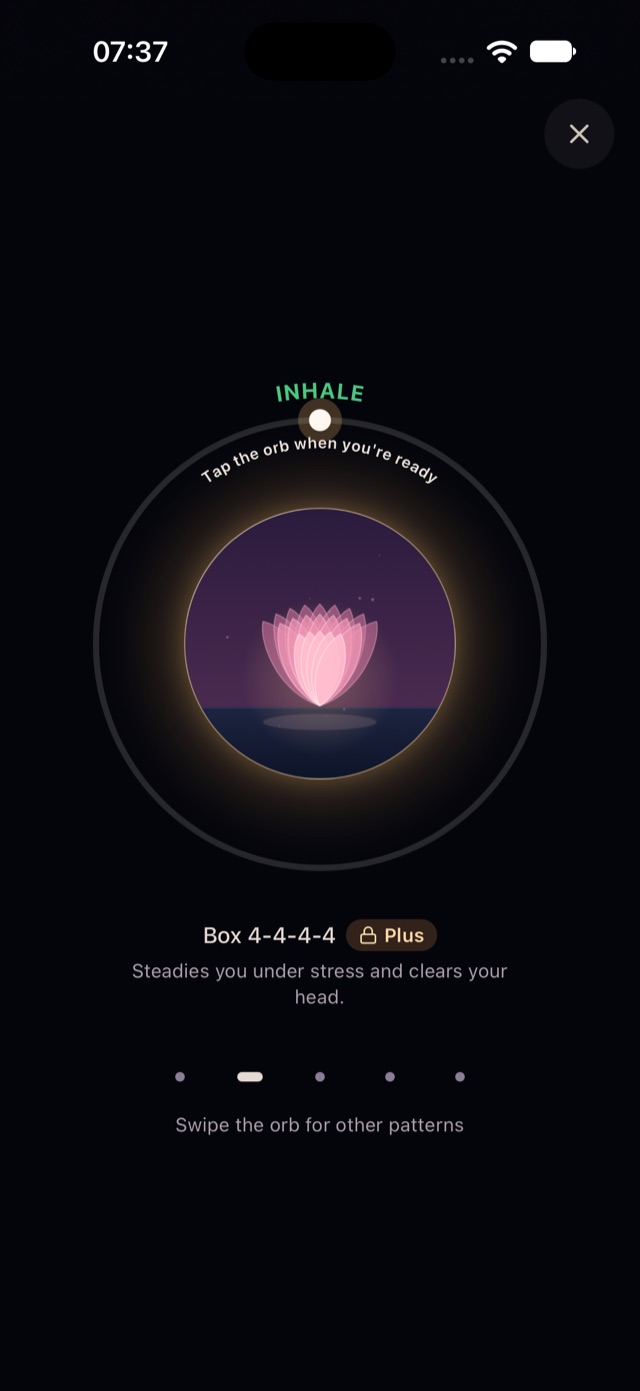
- Breathe (1 minute). Breathe in through your nose for four, and out slowly for six. Do this six times. The breathing timer can pace it for you.
- Loosen (1 minute). Roll your shoulders back three times. Unclench your jaw. Open and close your hands. Let your forehead go soft.
- Look (1 minute). Look around the room and name five things you can see. Plain things: a cup, a window, a plant. This brings your attention back to where you are.
- Choose (1 minute). Ask yourself one question: what is the one small thing I will do next? Say it quietly, then do only that.
What each step is doing
It helps to know why the steps are in this order, so you can adjust them when you need to.
Settle tells your body you are stopping. Without this, the rest feels like another task.
Breathe gives your attention a steady rhythm to follow. The longer out-breath is the part that most people find calming.
Loosen releases the tension you were carrying without noticing. Shoulders and jaw are the usual places.
Look pulls your mind out of the loop of thoughts and back into the room. If you want a longer version of this step, try the 5-4-3-2-1 grounding exercise.
Choose turns the pause into a direction. A reset that ends with a clear next step is much more useful than one that ends with a vague feeling that you ought to do something.
Making it a habit
Link the reset to something you already do: after lunch, before opening email, or when you close a laptop. A familiar cue makes it far easier to remember.
You can also keep a shorter version for the hardest moments. Three slow breaths and a drop of the shoulders takes under thirty seconds, and you can do it before a call or while a page loads.
Variations
- At your desk. Keep your eyes open and soft. Skip the shoulder rolls if others are around.
- After a hard conversation. Spend longer on the breathing step, and skip the "choose" step until you feel steadier.
- Standing up. Press your feet into the floor and feel the weight of your body. The same steps work well on your feet.
- On a walk. Slow your pace, breathe out for longer than you breathe in, and name five things you see.
When a reset is not enough
A short pause helps with an ordinary busy day. If you feel overwhelmed most days, or you cannot find any relief, it is worth talking to someone you trust or a professional. If you ever feel unsafe, please visit our helplines page.
A longer reset when you have time
Some days you can afford more than five minutes. When you can, stretch each step instead of adding new ones. Breathe for three minutes rather than one. Walk around the block for the "look" step, and notice the weather, the sounds and the smell of the air.
A longer reset is also a good moment to check the basics. Have you had water, something to eat, and a minute of daylight? Small physical needs are easy to miss when the day is crowded, and meeting them often changes how the rest of the afternoon feels.
Resetting with other people
You can also share a reset. Before a team meeting, suggest one minute of quiet and three slow breaths. Many groups find it takes the edge off and helps everyone arrive. If that feels awkward, start with yourself and let others notice.
At home, a reset can be a way to change the mood in a crowded evening. Dim the lights, put the screens down for five minutes, and let everyone take a few slow breaths together. Children often enjoy counting the breaths along with you.
Common questions
Can I do this at work?
Yes. Every step is quiet and can be done in a chair. You can skip the stretch if you would rather not move.
How often should I do a reset?
Whenever the day starts to feel crowded. Once or twice a day is plenty, and many people find the middle of the afternoon works well.
What if five minutes feels too long?
Do just the first two steps. Even one minute of slow breathing and loose shoulders can change the feel of the next hour.
Try this in Aama
Breathing exercises, sleep sounds and a mood journal, in one quiet app for your phone. No ads inside.
Feeling unsafe? Get help now
Related guides
A slow 10-minute morning routine
A gentle way to start the day without grabbing your phone first: water, light, a few breaths and one intention.
Read the guide →4 min readThe 5-4-3-2-1 grounding exercise, step by step
Use your five senses to come back to the present moment. A simple, quiet exercise for when your mind is racing or spinning.
Read the guide →