Calming sounds explained: rain, tones and singing bowls
Not medical advice.
5 min read
Why does rain feel soothing, and a sudden alarm does not? Sounds that are steady, soft and predictable tend to feel safe. Sounds that jump out at us ask for our attention. Calming sounds work by giving your mind something even to rest on.
What makes a sound calming
Three things usually matter:
- Steadiness. A sound that stays much the same does not ask you to react.
- Softness. Gentle, rounded sounds feel easier than sharp ones.
- Familiarity. Rain, wind and humming are sounds people have heard all their lives.
Individual taste matters too. Some people love thunder, and others find it unsettling. Trust your own response.
A tour of the sounds
Rain. A wide, even wash of noise. It covers little sounds like traffic or a creaking house, which is why many people like it at bedtime.
Thunder. Low and rolling. Distant thunder can feel cosy under a blanket. Keep it quiet, and drop it if it makes you tense.
Soft tones. A steady hum or pad gives you a single note to rest on. It is simple and free of any story.
Singing bowl. A struck bowl rings and fades slowly. The long fade invites a long out-breath, so it pairs nicely with breathing exercises.
Mixing and volume
You can combine sounds: rain at a low level with a quiet tone underneath is a favourite. Start with one, then add another very slowly. If you are not sure, less is more.
Keep the overall volume low. A good test is that you could comfortably talk over it. Loud sound all night is tiring, not soothing.
Try different blends in the free sleep sounds mixer.
Using sounds well
- Choose your sound before you get into bed, so you are not fiddling with a bright screen.
- Set a timer of 15 to 30 minutes so it fades out on its own.
- Put the phone down and keep it away from the pillow.
- Pair it with a slow breath. In for four, out for six.
If you want a full evening plan, see Wind down before bed.
Choosing a sound for the moment
The right sound depends on what you are doing. A few ideas:
- Falling asleep. Soft rain or a low, steady tone, with a timer so it fades out.
- Working or reading. A gentle, constant wash of rain, at a volume you barely notice.
- A stressful moment. A singing bowl, paired with a few slow out-breaths, to mark a pause.
- Waking in the night. A very quiet tone, or no sound at all, so you are not tempted to pick up a bright screen.
None of these are rules. They are starting points for your own experiments.
Why silence can be good too
Sound is not always the answer. Some people find that any noise keeps their mind slightly on guard, and prefer a quiet room. If that is you, try earplugs, or simply let the room be still.
It can also help to take a break from sounds now and then. If you have used the same sound every night for months, try a quiet night and notice what happens. You will learn something about what you actually need.
Small things that make sounds work better
Use a speaker, not headphones, in bed. Headphones can be uncomfortable lying down and can tangle during the night. A small speaker on a table works well.
Put the device where you cannot see the screen. A bright screen undoes some of the calm of the sound.
Keep it consistent. Using the same sound at the same point in your routine becomes a cue. After a while, the first few seconds of it can feel like a signal to settle.
Check the volume on a quiet moment. Sounds that seem fine at 9 p.m. can be too loud at midnight. Set it low when you start.
Sounds for different times of day
Calming sounds are not only for bedtime. A gentle sound can mark the edges of your day. In the morning, a soft tone or a single bowl strike can ease you into waking. Through the afternoon, a steady wash of rain can lower the background buzz while you read or write.
In the evening, move toward the softest options. A good habit is to choose the same sound each night for a week and notice whether your body begins to settle sooner. The familiarity is part of what makes it work.
If you share a space, agree on a volume that suits everyone, or use a pillow speaker or headphones designed for sleep. Calm should not come at the expense of someone else's peace.
A note
Calming sounds are a pleasant companion to rest, not a medical aid. If sleep trouble goes on for weeks, speak to a doctor or another professional.
Common questions
Which sound is best for sleep?
There is no single best sound. Steady, soft sounds like rain or a low tone suit many people, but it comes down to what you find comfortable.
How loud should sounds be at night?
Low, just enough to cover small background noises. If it is the first thing you notice, turn it down.
Should I leave sounds on all night?
Many people prefer a timer so the sound fades out. This avoids being woken by a change and keeps the night quiet.
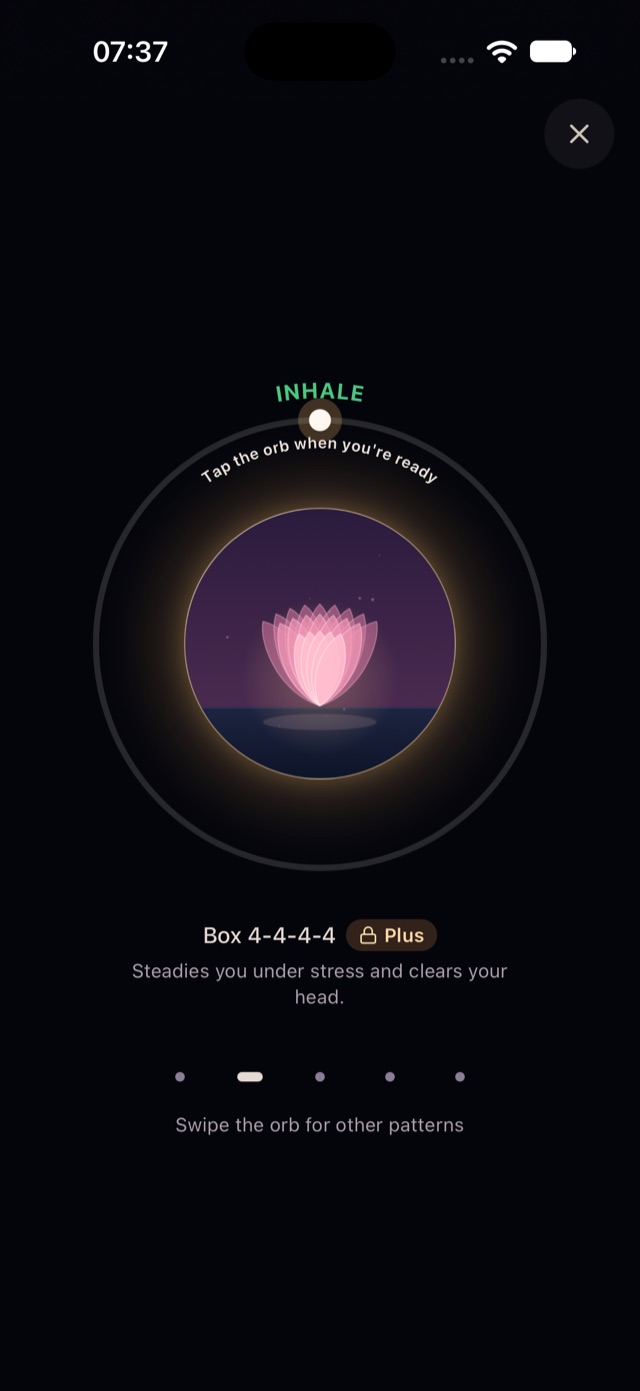
Try this in Aama
Breathing exercises, sleep sounds and a mood journal, in one quiet app for your phone. No ads inside.
Feeling unsafe? Get help now
Related guides
A slow 10-minute morning routine
A gentle way to start the day without grabbing your phone first: water, light, a few breaths and one intention.
Read the guide →4 min readThe 5-4-3-2-1 grounding exercise, step by step
Use your five senses to come back to the present moment. A simple, quiet exercise for when your mind is racing or spinning.
Read the guide →