Wind down before bed: a 20-minute routine
Not medical advice.
7 min read
Evenings can feel loud. The day is over, the tasks are done, and now every worry has room to speak. A long, perfect bedtime ritual is hard to keep up. A short, gentle one is much easier, and it works because you can actually do it.
Why evenings feel so loud
During the day there is always something to attend to. When you finally stop, your mind has no more distractions, so unfinished thoughts arrive all at once. That is a normal thing minds do. It does not mean something is wrong with you.
A small routine gives the evening a shape. It tells your body, step by step, that the day is closing. You do not need an hour. Twenty minutes is enough to begin.
The same steps in the same order also help. Your mind learns the sequence, and after a while the first step starts to feel like the start of a slope rather than a cliff.
The 20-minute routine
Do these in order, at an easy pace. Skip anything that does not fit your home.
- Minutes 0 to 3: lower the lights. Switch off the bright overhead light. Use a lamp or two instead. Dim, warm light is a clear signal that the evening is winding down.
- Minutes 3 to 6: put screens down. Plug the phone in. If something is on your mind, write it on paper as a short list so it can wait until tomorrow.
- Minutes 6 to 10: a warm, caffeine-free drink. Warm water, herbal tea or warm milk. Hold the cup in both hands and take your time.
- Minutes 10 to 13: four slow breaths. In through the nose for four, out for six. Let your shoulders fall each time.
- Minutes 13 to 17: a few lines in a journal. Write one word for how you feel and one line about the day. That is all.
- Minutes 17 to 20: quiet sounds. Get into bed, set a low sound with a timer, and close your eyes.
Making the room ready
The routine works better when the space supports it. You do not need to buy anything. A few small changes make a difference:
- Cooler is usually better. Most people sleep more comfortably in a room that is slightly cool, with enough blankets to be warm.
- Darker helps. Close the curtains. Cover or turn away small bright lights from chargers and devices.
- Quieter, or steadily noisy. If you cannot remove outside noise, a steady sound like rain can cover it.
- Keep the bed for rest. Try not to work or scroll in bed. Your mind will start to link the bed with rest.
Sound tips
Steady, soft sounds work best. Rain, a gentle tone or quiet piano music are good choices. Avoid anything with sudden changes or lyrics that pull you in.
Keep the volume low, just enough to cover small noises around you. Always set a timer, 15 to 30 minutes, so it fades out on its own and does not wake you later. You can try the free sleep sounds mixer to find a blend you like, or read more in calming sounds explained.
If you can't sleep after 20 minutes
Lying there and watching the clock tends to make things louder. If you have been awake for about 20 minutes, get up. Go to another room with a dim light and do something quiet: read a few pages of an ordinary book, stretch gently, or sip some water.
Return to bed when you feel sleepy. Avoid bright screens, work and news. Do this as many times as you need. It is not a failure, it is just a reset.
If your mind is full of thoughts, our guide on calming racing thoughts at night has a few more ideas.
When to ask for help
If trouble sleeping goes on for weeks, or it affects your day a lot, it is a good idea to speak to a doctor. A routine can help with the evening, but it is not a replacement for professional advice.
Keep it small
The best routine is the one you will do tomorrow. Pick two or three steps from the list and repeat them for a week. Add more only if you want to. On the nights when it all falls apart, which will happen, just do the one thing: lower the lights and take four slow breaths. That is still a routine.
Adjusting for real life
Not every evening goes to plan. Shift work, young children, a late meeting or a noisy flat all change what is possible. A routine is a shape, not a rulebook, so bend it.
If you only have ten minutes, keep the lights, the breaths and the sound. If you share a room, use headphones for sound and a small lamp for the journal. If you work late, begin the routine when you finish rather than at a fixed clock time, so that your body still gets the signal that work has ended.
Common questions
When should I stop caffeine?
Caffeine stays in your system for hours. Many people feel better cutting it off by early afternoon, but it varies from person to person. Try an earlier cut-off for a week and notice the difference.
Are naps a problem?
Short naps early in the day are fine for most people. Long or late naps can make it harder to fall asleep later, so keep them brief and before mid-afternoon.
Should my phone be in the room?
If you can, charge it across the room or outside it. If it stays near, put it face-down on do-not-disturb and use it only for a quiet sound with a timer.
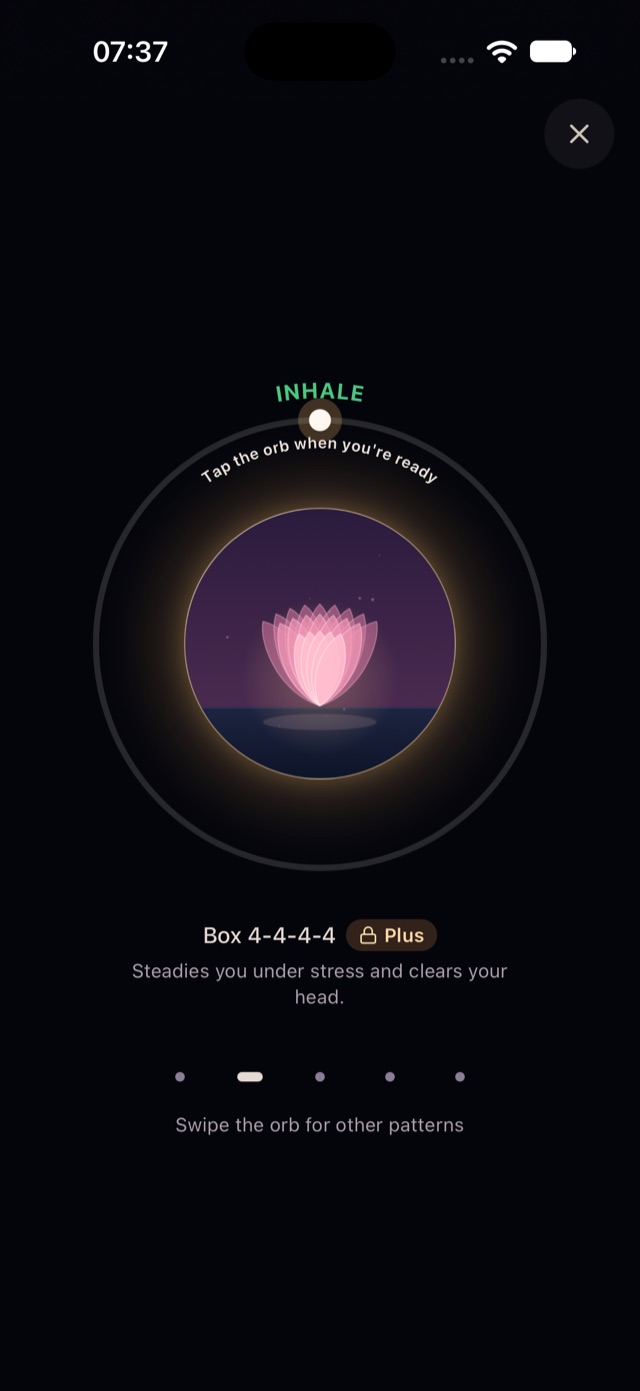
Try this in Aama
Breathing exercises, sleep sounds and a mood journal, in one quiet app for your phone. No ads inside.
Feeling unsafe? Get help now
Related guides
A slow 10-minute morning routine
A gentle way to start the day without grabbing your phone first: water, light, a few breaths and one intention.
Read the guide →4 min readThe 5-4-3-2-1 grounding exercise, step by step
Use your five senses to come back to the present moment. A simple, quiet exercise for when your mind is racing or spinning.
Read the guide →